Choose cash flow, appreciation, equity growth or redevelopment.
Calgary, Alberta · Real Estate Investor Guide
Invest with clarity.
Build with purpose.
A practical preview for defining, financing, analyzing, acquiring and operating a real-estate investment.
Your roadmapThe journey.
The journey.
Five clear steps.
A preview of the complete process covered in the downloadable guide.
- 01
Define
Set the objective, horizon and risk limits.
- 02
Finance
Confirm equity, closing cash and reserves.
- 03
Analyze
Test income, expenses, debt and scenarios.
- 04
Acquire
Complete due diligence and close carefully.
- 05
Operate
Build systems for tenants, records and exit.
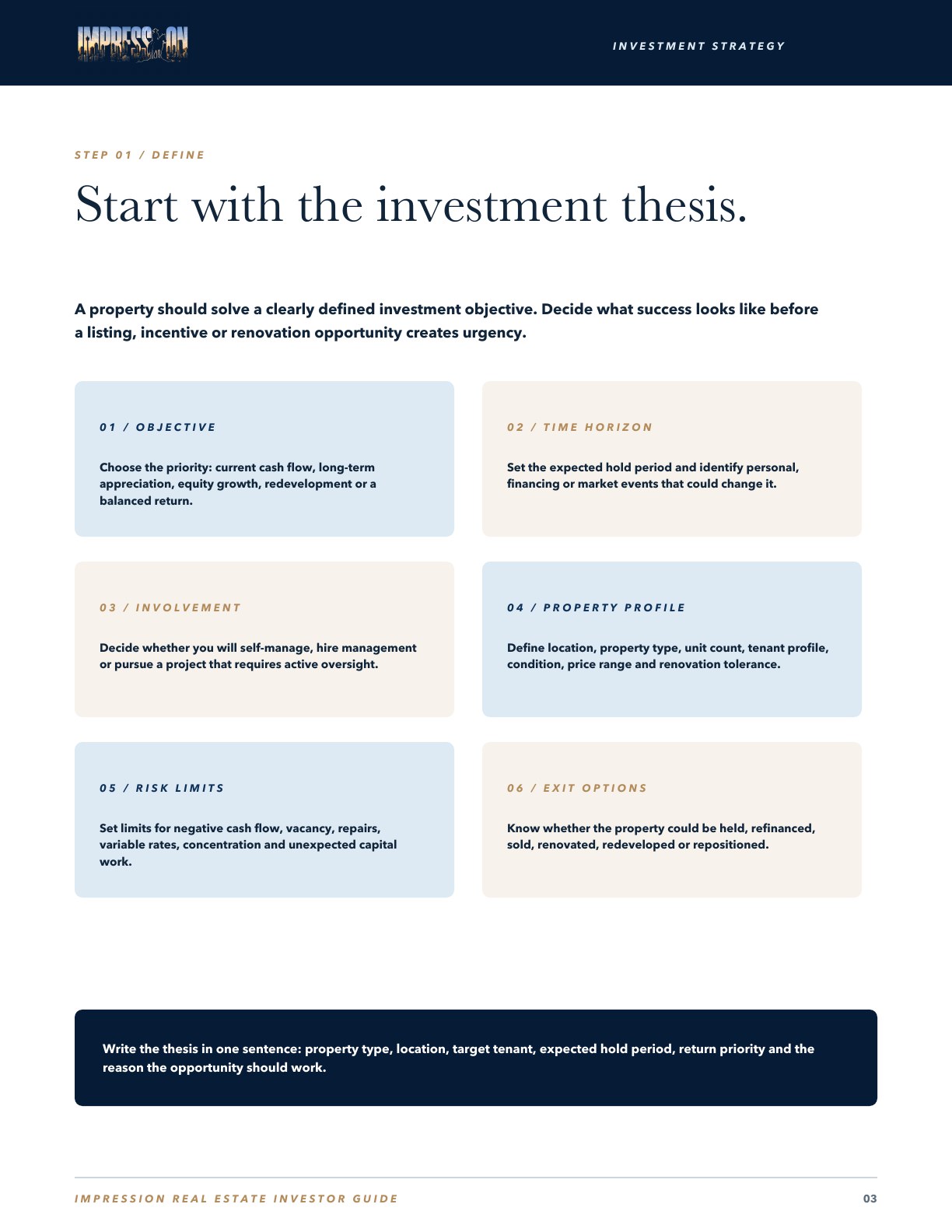
Step 01 · Define
Start with the investment thesis.
Decide what success looks like before a listing, incentive or renovation opportunity creates urgency.
Set the expected hold period and possible change points.
Define tolerance for vacancy, repairs and negative cash flow.
Consider hold, refinance, improve, reposition or sell.
Steps 02–03
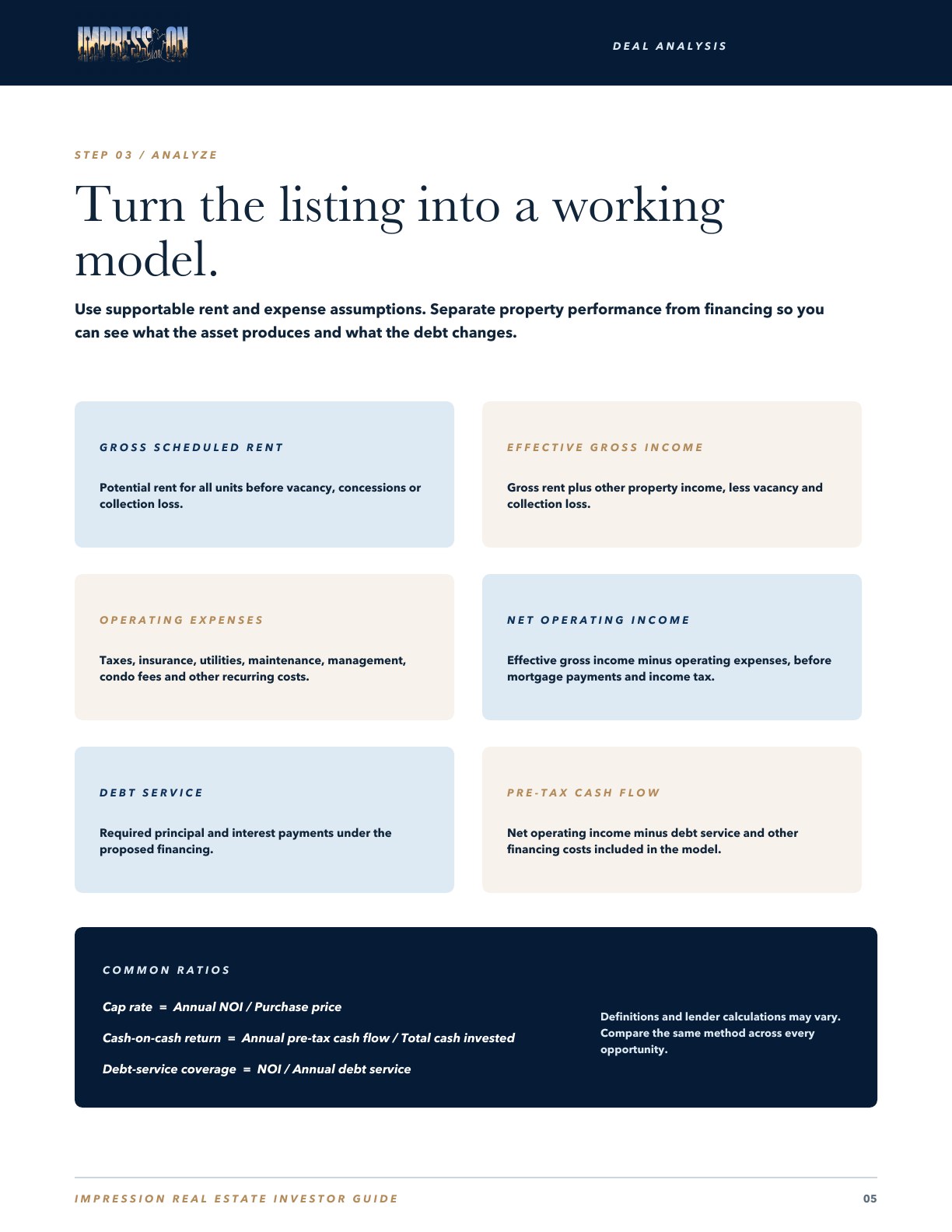
Finance the downside—and model the deal.
Plan for closing, vacancy, repairs and stabilization, then separate property performance from financing.
Good to knowStress-test higher rates, lower rent, longer vacancy, repairs and slower stabilization.
Non-owner-occupied properties commonly require at least 20% equity.
Effective gross income minus operating expenses.
NOI minus debt service and other financing costs.
Compare cap rate, cash-on-cash return and debt-service coverage.
Step 04 · Acquire
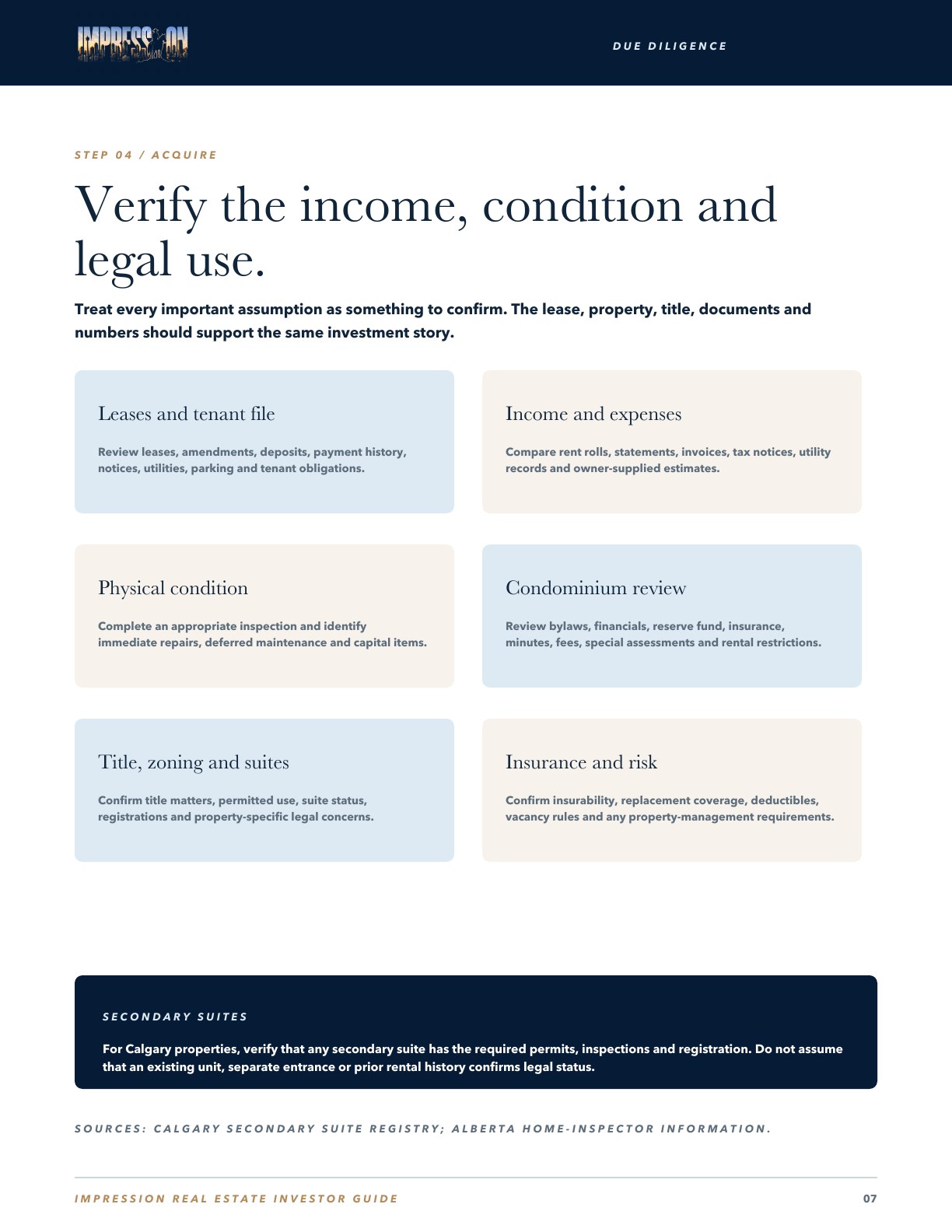
Verify the income, condition and legal use.
Treat every important assumption as something to confirm through documents, inspections and professional advice.
Review leases, deposits, payments and obligations.
Compare rent rolls, invoices, taxes and utilities.
Identify immediate work, deferred maintenance and capital items.
Confirm permitted use, registrations and legal concerns.
Step 05 · Operate
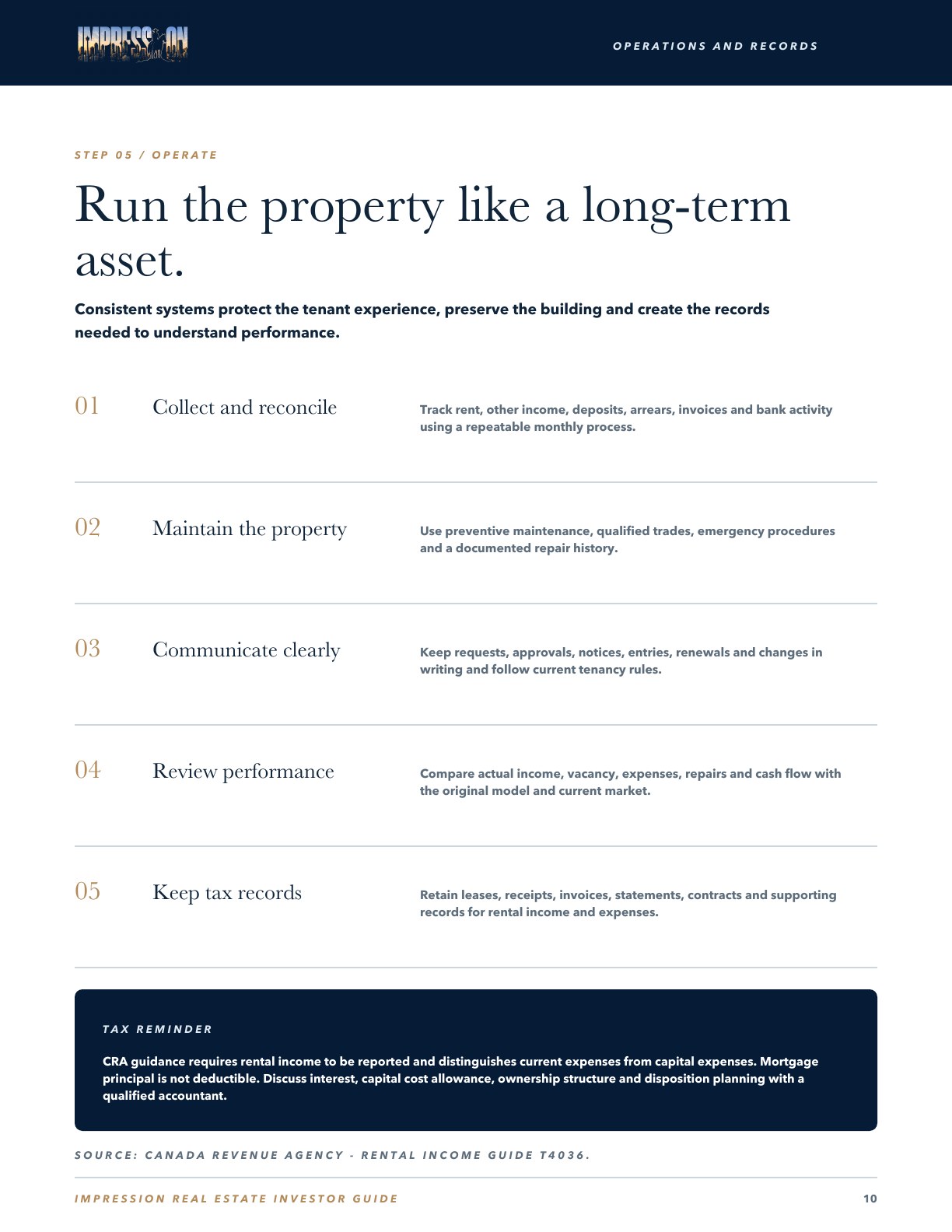
Run the property like a long-term asset.
Consistent systems protect tenants, preserve the building and reveal actual performance.
Use a clear lease, inspection reports and proper deposit handling.
Reconcile income, expenses, repairs and cash reserves.
Revisit financing, condition, value and the investment thesis.
Local insight. Direct access. No pressure.
Ready to build your portfolio?
Start with a clear conversation about your objective, capital, preferred markets and opportunity type.
Download the complete guide
Samneet OberoiCall Samneet